Showing posts with label Himalayas. Show all posts

Tuesday, 28 November 2017

The Rightful recognition of Nanda Devi East as Sunanda Devi


Nanda Devi and Sunanda Devi

It was described in the last post that the goddesses Nanda and Sunanda occur together in mythology and worship. Nanda goddess means the Bliss giving goddess whereas Sunanda means the good bliss giving goddess. One may wonder why the prefix good is added to Sunanda when in fact Nanda is the more active and senior goddess. The reason is perhaps that Nanda Devi also takes on fearful avatars in mythology when she goes about conquering evil demons and at such times adding good is not necessary.

Goddess Nanda Devi has been regarded  variously as a human representation of the Great Mother Goddess and even as that of Mother Earth. Goddess Sunanda has appeared in mythology and  history from time to time as the companion goddess or sister of this goddess. In nature the Nanda Devi mountain, one of the highest in the Himalayas is regarded as a sacred and majestic representation of the Great Goddess on Earth. It is a twin peak mountain in which the lower summit was referred to as Nanda Devi East by European explorers because the locals did not spell out the name of the other peak, so habituated they were in calling the entire massif as Nanda Devi. Naming a part of a sacred mountain as something east is not an appropriate nomenclature for those who hold the mountain in spiritual reverence.

In his article on Nanda Devi - Nanda Devi: Vision or Reality? - authored by Bill Aitken (William McKay Atiken)and author of several books on the Himalayas,  published in 2006  (Himalayan Journal 62, url: http://www.himalayanclub.org/journal/nanda-devi-vision-or-reality/) this is what Bill Atiken had to say about the nomenclature of Nanda Devi east:

“Pilgrims to Garhwal’s Char Dham evince little interest in the Goddess for she is largely indiscernible except from high ground like Rudranath or on the descent to Tapovan. Nor does she have any conspicuous temples since her representation in the Sri Yantra form does not permit of any roof. Kumaun astride the pilgrim route to Kailash was forced to take note of the Goddess’s presence and some read in the first English version of the peak (as Nundi Deva ) a reference to Shiva’s sacred bull. No one has commented on the inappropriateness of the foreign mountaineering nomenclature ‘Nanda Devi East’ which could suggest a dismembered deity. This colonial ascription survives while other Sanctuary features like the cols named after Longstaff, Ruttledge and Shipton have all been replaced (not always successfully) by local names.

To illustrate how local lore can assert claims that fail to stand the test of time, is the naming of Nanda Devi’s east peak as ‘Latu’ by the Schlaginweits on their German map of1857. As the Garhwal herald of the Goddess who leads her twelve yearly Raj Jat via Rupkund to Homkund, Latu Devta might seem a logical candidate for the lesser of the twin summits and this apportioning would neatly symbolize the takeover of a primitive cult by a more sophisticated faith. However the drawback to this theory is that, as noted, the twin peaks are not obvious from Garhwal. Indeed the Raj Jat, so far as I know, enjoys not a single vantage point from which either of the Nanda Devi peaks can be seen.

The fact that no one in Kumaun has ever suggested the name of Sunanda, the younger sister of Nanda Devi, for the lesser peak is a reminder that few of the Devi’s village worshippers are concerned about the particulars of her physical identity. Most are unaware that today Latu Devta has been relegated to become Latu Dhura, occupying a back seat on the east Sanctuary curtain overlooking Kumaun, a completely meaningless ascription from the point of view of Raj Jat lore.”

However, this oversight has now been corrected by this author. What appears to be the first published reference to Nanda Devi East as Sunanda Devi has been recorded in his novel “Nude besides the Lake” This book is available as a searchable google book and therefore the nomenclature has been quickly noted and adapted by others including online encyclopaedias and information sources, religious organizations,  mountaineers, several official websites and others. Thus the proper recognition of the good bliss giving goddess, Sunanda Devi, as the younger companion of Nanda Devi and the younger daughter of the Himalayas has now been restored and the unintentional yet inappropriate foreign reference to a sacred mountain as something east of something is no longer necessary. May the Goddesses Nanda and Sunanda continue to bless all who approach them with reverence and respect due to Mother Earth, some of whose majestic facets, these sacred mountains represent.

Sunanda the Goddess - An Embodiment of Divine Love


A Comprehensive view of Mother Goddess as known in South, East and Himalayan Asia


Jai Mata Ki (Praise the Mother Goddess)

While it is a purpose of every life form to evolve to yet higher states and eventually attain God and become a part of Him, some godly beings, (known as bodhisattvas in Buddhism, and angels in Christianity)  choose to remain as created beings in the universe in service of Universal Consciousness and out of compassion for others, and in order to assist the latter in their evolutionary journeys towards enlightenment.

One significant thing that is paradoxical to outsiders is that while Hindu philosophy upholds monotheism and a single Almighty in the Universe, many Hindus (although not all sects) also follow the worship of numerous gods and goddesses. The reality is that since the Almighty is formless and infinite, any finite divine portion of the Almighty may be personified as a facet or personification of the Infinite Lord and that is the reason for so many gods and goddesses. The Almighty is both the Eternal Father and a Mother of all life; therefore He may be viewed as a Father God or as a Mother Goddess. Even here there are very many representations of the Great Mother Goddess, the female side of the Almighty. My favorite is Naini Mata - her representation in Nainital in the Himalayas. Still Higher up in the mountains she is known as the Goddess Nanda and her abode is the mountain by the same name where she dwells with her sister the goddess Sunanda, Jai Ma Sunanda.
There is a philosophical point illustrated when the Mother Goddess is viewed as more than one as in goddesses Nanda and Sunanda. The point is that while we may view the Almighty as a Mother, we must not forget that She is represented throughout the universe in other diverse forms simultaneously, all being part of one whole Infinite reality, some parts divine and some even human like you and me. The Mother Goddess is the One and many at one and the same time. In Haidkhan she is know as Ma Haidakhandeshwari. She is the goddess with the lions and also the goddess with the lotus about which monks in Tibet chant - Om Mani Padme Hum

Although God is infinite, he has often been visualized as human-like for purpose of worship, as a male or a female. Whereas, it is difficult to conceive of God as either male or female it is easy to do so when considering divine personalities that are finite, and some try to approach the Infinite through them. A  reason for this is perhaps because most humans knowing little about the spiritual side of life tend to ignore the Infinite and Universal one and only God that pervades the universe, Who is either formless or with a form beyond comprehension, and Who is difficult to visualize. However, if a human can recognize the truth for what it is, he or she can gain immense spiritual and worldly advantage by cultivating a loving relationship with finite gods or goddesses charged with universal consciousness, consciously. The important thing to realize is that every thing is a part of one whole Infinite and is powered by Her (Shakti or universal energy of which matter from which stars are formed is a part) and connected to Him (Universal Spirit and Universal Consciousness, a perceptible part of which is force of gravity in visible and dark matter that holds our universe together) with both being parts of the same one and only God of the universe.

While God is beyond sexual distinction and contains within Him both the male and female principles, His power appears in divine entities of the universe most often as a single divinity at one time, at times as two close companions, and also rarely as three in a trinity, either male or female. The female face of the Lord is sometimes described merely as a word  that appeared at the beginning of creation ( In the beginning was the word and the word was with God). While the original sound or vibration from which the entire universe emanated is incomprehensible to created beings, its verbalised form as a Mantra (Gayatri mantra) or its personified form as goddess Gaytri is. God could now be seen as two, a Male Spirit and as the Female created universe, but both in reality being parts of One.

Gayatri Devi the goddess is personified by many Hindus as the Goddess Gayatri and her different attributes personified as appearing in three goddesses as Saraswati, Durga and Laxmi. While there are many manifestations of the Goddesses Durga and Laxmi with numerous different names mentioned in mythology, there are few of the the goddess Saraswati, the Goddess of Knowledge who remains apart from the created universe while continuing to emanate knowledge and beauty through it,  her other two Goddess sisters repeatedly intervene in the created universe, the former Durga intermittently in fierce roles as a vanquisher of evil when it exceeds limits, and the latter Laxmi, in kinder and compassionate roles as a goddess of prosperity, a freedom from need, as a goddess of mercy, and on rare occasions they appear together as, sisters Tara and Tarini; Nanda and Sunanda or even as close divine companions on a mission in the Universe. Undoubtedly this infinity of the representations of gods and goddesses is mind boggling and intimidating but that is how the universe is, and just as we do not allow the infinity of the universe to boggle us by focusing on its limited aspects while ignoring the rest, so it must be when we look at its divine side, the gods and goddesses. It is perhaps because of this that Buddha and other great spiritual masters advised disciples to keep their focus on the Infinite Formless Lord while regarding other divinities as His transient creations that may be ignored but not disrespected at given times. However ignoring all is impossible as long as humans in finite bodies are confined to a world of names and forms.

Some Christians view Mother Goddess in Mother Mary and others in a female view of the Almighty such as the Mystic Christian Dame of Norwich, the first lady author in English language, and some in the personification of Mother Earth as goddess Gaia.


The Lord dwells in forests and mountains on earth and in the stars


Aside from the Universe as a whole, it is worth worshiping some of its components too, such as love of a mother, even a boss who is kindly, teachers, sun that energizes all life, stars that light up the universe and divine spiritual masters such as Jesus and Buddha/gods/goddesses/angels/bodhisattvas that one has been fortunate to acquire familiarity with. Not all of them at the same time leading to confusion, but perhaps just one or a few that appeal. After all, as a being with a finite body, a human does benefit by his or her relationship with other humans, and this benefit can be much greater when such a relationship is developed with gods. The Divine song Bhagavat Gita has this suggestion for humans,

"Foster the gods through sacrifice (selfless deeds) and let the gods foster you. Thus fostering one another you shall attain the highest good"

We never get to know another human fully and tend to guess or imagine some of the thoughts, desires or qualities of other humans we choose to love. This guessing game is undoubtedly much greater when it comes to a god or goddess because everything about a god or goddess cannot be known to a human with his or her limited perception.

Goddesses Nanda and Sunanda depicted together in red ochre
In the beautiful Kumaon region of India, goddess Sunanda recognized as a goddess sister and close companion of goddess Nanda, has been worshipped since ancient times. She is a local representation of the Great Mother Goddess. Recognised as a sister of Mother Goddess, goddess Sunanda may also be regarded as a mother goddess or she may be regarded as a loving motherly aunt. Like most aunts she is ever kind and loving unlike mother who can punish her children at times. The loving goddess Sunanda is more likely to just inform mother or another god  about a mischievous being in the universe rather than act herself. It is because of this reason that although we have stories of  Mother Goddess Durga assuming fearful forms to destroy demonic beings, we do not come across such accounts about goddess Sunanda. Those who are uncomfortable with fearful avatars of Shakti may choose to develop a realtionship with her gentle sister Sunanda instead. Perhaps that is one of the purposes of  mother Goddess appearing in two forms rather than one. It is also to illustrate the point that if the power of God is perceived in a single entity, it does not diminish its flow from other divine entities or from the rest of the universe.


Mother Earth as  Red Ochre
All life is created from a combination of matter and spirit and therefore many also visualize God as the Father Spirit and all of Nature as Mother Goddess. The most majestic visulaization of  Mother Goddess on Earth are the twin Himalayan peaks of Nanda Devi and Sunanda Devi appearing as two, yet two sides of the same mountain.


The personification of Earth as goddess is also known as goddess Gaia to some. Much less is known to humans about the lovely goddess Sunanda as compared to mother goddess Nanda. To get more information on her, one may seek to discover about her through other incarnations of goddess Sunanda. There does appear to be one more elsewhere in India, in the province of Orissa where she has possibly appeared as a sister reincarnation of mother goddess with the name of Tarini and where the two goddesses are worshipped together as Tara and Tarini since ancient times. One can be sure that  goddesses Tara and Tarini are avatars of goddesses Nanda and Sunanda because they too are avatars of Maha Shakti. The temple of Tara and Tarini besides being a Hindu shrine is also a famous Buddhist shrine. In ancient times the sharp distinction between Buddhism and Hinduism has not always existed. Therefore the fame of mother goddess as Tara has spread far and wide into Asia along with spread of Buddhism whereas that of goddess Tarini has spread across to south east Asia and  Japan as a female Bodhisattva (most often spelt as Tarani Bosatsu in modern literature). In Tibet the name Tara is a generic name for all forms of mother goddess. The different forms here are distinguished simply by adding a prefix to the name Tara, most frequently that of color. Some forms of the goddess are fierce like the fierce avatars of Nanda and others gentle like the compassionate avatars of Sunanda.

Lotus is a flower much loved by the Goddess
In South Asia the goddess Sunanda is worshipped in Himalayan Kumaon and Garwhal divisions along with her sister Nanda. Goddess Nanda is far more known in history and mythology where she as Durga, Kali, Parvati and numerous other avatars plays an active and even martial role in destroying evil and protecting good.

Goddess Sunanda or Tarini as a younger sister of  mother goddess, although less frequently visible, is no less powerful than her other sister. They are both different representations of the same force. Goddess Sunanda or Tarini, as a companion of gods and goddesses plays the a role of  messenger and protector. It is said that her compassion for living beings is stronger than a mother's love for her children. She also brings about longevity, protects earthly travel through oceans, mountains, forests and fields and guards her followers on their spiritual journey to enlightenment.

Goddess Sunanda may be visualized at times as a fair white goddess, holding a lotus in her left hand and in a gesture of blessing with the right hand, seated in a yogic posture perhaps seated on a giant lotus or surrounded by flowers.


There are innumerable other avatars of the heavenly sisters, Nanda and Sunanda, not all known to mankind. In some of their other heavenly Avatars, a many or four armed Goddess Nanda as Durga, the warrior goddess is depicted as holding weapons of destruction in some of her hands and accompanied by one of the fiercest animals known to man, the lion. On the other hand the heavenly form of gentle goddess Sunanda as the four armed Laxmi is a Goddess of prosperity that holds two lotuses in two of her hands while using a right for a gesture of blessing and a left to shower unlimited prosperity on chosen disciples. She is depicted surrounded by flowers and her seat is a giant heavenly lotus. There are also undifferentiated forms of the goddesses where in one of their primordial forms known as the goddess Kushmanda they play a role in creation, helping to create the universe merely with a smile. Some of these undifferentiated avatars are depicted as both holding a lotus and gentle symbols while some other hands hold weapons of destruction to destroy evil from the created universe when it exceeds limits. Some evil must continue to exist in the universe since creation is a play of opposites. The evil and its consequence suffering are required in the worlds as an aid to teach beings the consequence of perpetuating sin and evil and thus helping beings evolve. However, it must be pointed out that not all avatars of goddess Nanda are fierce and as the goddess Nanda or Parvati she is the gentle face of  Mother goddess of the mountains and a female half of Shiva, a male side of God or the Universal Spirit.

The Orissa temple of the goddesses in its original form is a very ancient temple mentioned in ancient Sanskrit literature (Puranas),  Ramayana as well as ancient Buddhist literature. The fact that these different books give different stories about the origin of these goddesses is because of their ancient origin but all recognize goddess Tara as mother Goddess and Tarini as her companion sister.  As Buddhism spread far and wide across Asia, a recognition of Goddess Tara as mother goddess was adopted in Tibet and Mongolia. However the Japanese adopted her sister Tarini as a female Bodhisattva instead and it is in this country that she has achieved great and sincere recognition by the Japanese Royal family as well as many ordinary Japanese since ancient times.

Nanda Devi and Sunanda Devi: Main and East Summits (photo: Alex Moran) From http://www.moran-mountain.co.uk/moran-mountaineering/Nanda%20Devi%20East.htm
In the Himalayas, the eastern summit of Nanda Devi Mountain referred to as Nanda Devi East by European visitors to the Himalayas is the greatest recognition of Sunanda Devi in India as her manifestation in Nature.

Goddess Sunanda is a great embodiment of love for all living things, not just animals and humans but also mountains, rivers,  trees and flowers. She is the goddess of mercy and compassion who is ever ready to listen to the cries of the devotees. A simple way to please her on earth is to love all creatures and trees    or plant some especially trees with edible fruits and nuts as adornments for mother earth and solace for her children.  May she fill the lives of devotees with love and ever protect them in their journey towards happiness and enlightenment.


A Chinese rendition of the Mother Goddess
In Sanskrit her name is Avalokiteśvara and in Buddhism she is a bodhisattva who embodies the compassion of all Buddhas. Her earliest manifestations are as a male and later ones charged with compassion and mercy are female. Avalokiteśvara is one of the more widely revered bodhisattvas in mainstream Mahayana Buddhism, as well as unofficially in Theravada Buddhism. In Sanskrit, Avalokitesvara is also Padmapāni -Holder of the Lotus or Lokeśvara - Lord of the World. She is portrayed on different occasions and in different cultures as either male or female. One of her earliest record in ancient Sanskrit literature depicts both Sunanda and Nanda as males on a Godly mission to earth (another post in this bloghttp://nainitalgoddess.blogspot.in/2012/10/the-goddesses-nanda-and-sunanda-of.html). Avalokitesvara has been variously translated as the Lord who gazes down on the world or as the Lord who has come down to the world. She is also regarded as the goddess who has come down to the world to listen to the cries of the needy from her lofty perch and in that sense her name Sunanda  can be broken up as Sun – Nanda also means hear Mother Goddess. In Taiwan a royal reincarnation of the goddess is revered as the goddess Mazu as a protector of sailors and fishermen whereas in the Goa region of India her avatar as Tarini plays the same role. In China her local name is Guanyin and here she is at times depicted as holding a branch of tree in her right hand while it continues to be held up in a gesture of blessing. In Japan her male manifestation is called  Kannon and her female manifestation as Tarani.


The Jewel inside the lotus is divine part of the one and only Lord of the universe

Ma Sunanda does not need a temple to dwell in. She dwells in the oceans, forests, lakes, mountains and all else that is beautiful in nature. She is the Jewel in the lotus. She cannot be pleased by calling out her name repeatedly, nor by gifts of cash and gold, but she is pleased easily if you gift fresh nourishing food to malnourished or hungry children, the very old and the handicapped or clothing for them if they are not well clothed, or even by planting and caring for trees, particularly those that bear edible fruits and nuts, while thanking her for making such loving service possible so that she may assist you in your deed of love for all life, in your journey towards enlightenment, and fill your heart with Joy.

Jai Ma Sunanda

Om Mani Padme Hum 


Listen to a Beautiful Musical rendition of this mantra from the depths of the Himalayas. You are sure to be enchanted, at


UPDATE 15 August 2013: This article was substantially updated over the last one week so as to cover the worship of the great Mother Goddess in Asia more comprehensively and the role that Ma Sunanda plays in this saga.


 Images of Om Mani Padme Hum, red ochre and of Chinese Goddess,, courtesy of  Wikiperdia Commons: 
http://en.wikipedia.org/wiki/File:Roussillon_sentier_des_ocres2.JPG
http://en.wikipedia.org/wiki/File:Guan_yin_100.jpg

Saturday, November 10, 2012

Goddesses Nanda, Sunanda and goddesses Tara, Tarani


Temple of goddesses Tara and tarani in Orissa, India
Goddesses manifest the female side of divinity inherent in the universe. Although all goddesses represent the same universal force, they have been worshipped in various avatars and forms by humans.

Some of these avatars although bearing different names bear a close relationship to each other whereas there are also some cases where different goddesses bear the same name. One such example is that of the lovely and gentle, yet powerful goddess Sunanda of Kumaon. There is also a goddess by the same name in Bangladesh but that goddess is in fact a modification of the name Sugandha that is an avatar of goddess Parvati, who also takes on the fearful avatars of Kali when the occasion calls for it, rather than goddess Sunanda.

The Goddess Parvati and Goddess Nanda are regarded by many as different appearances of Parvati. Hence, the goddess Sunanda of Bangladesh may be regarded as another form of goddess Nanda rather than goddess Sunanda. All this is no doubt very confusing and such confusions are expected when we seek human representations of something as vast as infinity.

If parallels between the goddesses Nanda and Sunanda are to be sought in other places then one may find a closer similarity with the twin goddesses Tara and Tarani much revered in Orissa (Odisha, India).

Image adapted from from http://en.wikipedia.org/wiki/File:Taratarini_maa.jpg

Monday, November 5, 2012

The Rightful recognition of Nanda Devi East as Sunanda Devi


Nanda Devi and Sunanda Devi

It was described in the last post that the goddesses Nanda and Sunanda occur together in mythology and worship. Nanda goddess means the Bliss giving goddess whereas Sunanda means the good bliss giving goddess. One may wonder why the prefix good is added to Sunanda when in fact Nanda is the more active and senior goddess. The reason is perhaps that Nanda Devi also takes on fearful avatars in mythology when she goes about conquering evil demons and at such times adding good is not necessary.

Goddess Nanda Devi has been regarded  variously as a human representation of the Great Mother Goddess and even as that of Mother Earth. Goddess Sunanda has appeared in mythology and  history from time to time as the companion goddess or sister of this goddess. In nature the Nanda Devi mountain, one of the highest in the Himalayas is regarded as a sacred and majestic representation of the Great Goddess on Earth. It is a twin peak mountain in which the lower summit was referred to as Nanda Devi East by European explorers because the locals did not spell out the name of the other peak, so habituated they were in calling the entire massif as Nanda Devi. Naming a part of a sacred mountain as something east is not an appropriate nomenclature for those who hold the mountain in spiritual reverence.

In his article on Nanda Devi - Nanda Devi: Vision or Reality? - authored by Bill Aitken (William McKay Atiken)and author of several books on the Himalayas,  published in 2006  (Himalayan Journal 62, url: http://www.himalayanclub.org/journal/nanda-devi-vision-or-reality/) this is what Bill Atiken had to say about the nomenclature of Nanda Devi east:

“Pilgrims to Garhwal’s Char Dham evince little interest in the Goddess for she is largely indiscernible except from high ground like Rudranath or on the descent to Tapovan. Nor does she have any conspicuous temples since her representation in the Sri Yantra form does not permit of any roof. Kumaun astride the pilgrim route to Kailash was forced to take note of the Goddess’s presence and some read in the first English version of the peak (as Nundi Deva ) a reference to Shiva’s sacred bull. No one has commented on the inappropriateness of the foreign mountaineering nomenclature ‘Nanda Devi East’ which could suggest a dismembered deity. This colonial ascription survives while other Sanctuary features like the cols named after Longstaff, Ruttledge and Shipton have all been replaced (not always successfully) by local names.

To illustrate how local lore can assert claims that fail to stand the test of time, is the naming of Nanda Devi’s east peak as ‘Latu’ by the Schlaginweits on their German map of1857. As the Garhwal herald of the Goddess who leads her twelve yearly Raj Jat via Rupkund to Homkund, Latu Devta might seem a logical candidate for the lesser of the twin summits and this apportioning would neatly symbolize the takeover of a primitive cult by a more sophisticated faith. However the drawback to this theory is that, as noted, the twin peaks are not obvious from Garhwal. Indeed the Raj Jat, so far as I know, enjoys not a single vantage point from which either of the Nanda Devi peaks can be seen.

The fact that no one in Kumaun has ever suggested the name of Sunanda, the younger sister of Nanda Devi, for the lesser peak is a reminder that few of the Devi’s village worshippers are concerned about the particulars of her physical identity. Most are unaware that today Latu Devta has been relegated to become Latu Dhura, occupying a back seat on the east Sanctuary curtain overlooking Kumaun, a completely meaningless ascription from the point of view of Raj Jat lore.”

However, this oversight has now been corrected by this author. What appears to be the first published reference to Nanda Devi East as Sunanda Devi has been recorded in his novel “Nude besides the Lake” This book is available as a searchable google book and therefore the nomenclature has been quickly noted and adapted by others including online encyclopaedias and information sources, religious organizations,  mountaineers, several official websites and others. Thus the proper recognition of the good bliss giving goddess, Sunanda Devi, as the younger companion of Nanda Devi and the younger daughter of the Himalayas has now been restored and the unintentional yet inappropriate foreign reference to a sacred mountain as something east of something is no longer necessary. May the Goddesses Nanda and Sunanda continue to bless all who approach them with reverence and respect due to Mother Earth, some of whose majestic facets, these sacred mountains represent.

May the good goddess Sunanda fill  hearts and lives with love and goodness even as her older sister Nanda goes about vanquishing evil from their lives. May the great goddesses together fill the lives of all inhabitants of the planet, over which they keep a watch from their adjacent lofty perches, with bliss. Jai Nanda, Jai Sunanda.

Who was Babaji or Baba Haidakhan?


A distinguishing feature of Hinduism is the existence of Numerous Gods and Goddesses. This is so even though Hindus believe firmly that there is only one God in the universe Who pervades everything and that there is nothing else besides him. To a person not familiar with Hinduism this monotheism appears contradictory to the polytheistic practices of Hindus. However, to a devout Hindu there is no contradiction. In Hindu philosophy it is believed that the infinite eternal Supreme may act through any finite being in the universe in order to carry out the functions of the universe or to communicate with a devotee. A devotee may regard the Infinite in a particular finite form possessing defined attributes and a chosen name in order to establish a tangible relationship with the Infinite and formless God of the Universe. The Bhagavat Gita (Or Gita in short), one of the most highly regarded scriptures of Hinduism explains this in verses 3-5 of chapter 12 as follows“ Those who controlling all their senses and even minded towards all, devoted to doing good to all creatures constantly adore the Supreme, even as present in their very selves, the unthinkable, all pervading, eternal unmanifest and immutable Supreme spirit they come to me. However the path of those who have their mind attached to the formless unmanifest is rugged for identification with the formless is attained with difficulty by a consciousness centered in a body possessing form and attributes. “When a Hindu chooses his or her favorite form of the Divine Infinite, it may be one that is characterized by particular benefits that the chosen God can grant to a disciple. Thus the Goddess Laxmi is regarded as a Goddess that can shower wealth on a devotee if pleased. 

The Bhagvat Gita does not regard highly a devotee that approaches the Divine Spirit with the aim of securing particular worldly benefits. This is explained in verses 21 to 23 of the Gita as follows:“Whatever Celestial form a devotee seeks to worship with faith the Eternal being stabilizes the faith of that devotee in that very form. If he worships and desires an enjoyment from this deity, he obtains that enjoyment if it pleases the Eternal Being. However the enjoyment gained by such persons of limited intelligence is perishable. The worshippers of Gods attain the Gods, whereas the worshippers of the eternal supreme spirit attain the eternal supreme spirit.”Thus it appears that although Hinduism as expounded in the Gita supports the practice of approaching the Eternal Supreme being through various Deities possessing various forms, it does not regard this practice as the best if it is associated with achieving some worldly gain. Elsewhere the Gita has explained that the best devotee is one who approaches the Divine out of wisdom and love only and not for the attainment of any gain or alleviating any suffering. The Divine can see that on His own and grant a devotee unasked anything that is necessary for his or her welfare.There is full freedom in Hindu practice to choose any particular God or Goddess for worship. It could be a single God or it could also be many since all represent different aspects of the same Infinite Supreme Being. The eternal Supreme Being is neither male nor female but the Gods who are a part of the physical universe are either male or female and a Hindu may choose either a male or female representation of God as per his or her inclination. The various forms and attributes of the innumerable Gods and Goddesses have been handed down through the ages. The origin of some is not known whereas some have been due to the visions of saintly seers. In this respect new forms of Gods and Goddesses can and do constantly emerge. When a God and Goddess is a historical personality there is likely to be a great deal of history and mythology associated with that God or Goddess. Some Deities such as Shankar, Krishna, Rama and Hanuman and the Goddess Durga are widely worshipped whereas there also exist deities that are worshipped in a single village consisting of a few hundred people only. In many cases a single God or Goddess may possess many different forms and names particularly if the God or Goddess is an elevated one close to the Infinite. Thus the God Vishnu possesses many names and avatars and so does the Goddess Durga. Some forms of the Goddess are gentle and others fearful. The Goddess takes on a fearful form when conquering great evil forces of the world. The Sanskrit text Durga Saptashati by the sage Markandya describes many of the forms and names of the Goddess.The scriptures describes the eternal Supreme being who may be related to the Divine name Om or Shiva existed as neither male nor female at the beginning of creation. He then produced the female principle in order to propagate the physical universe through the union of males and females. The female entity was produced from the very being of the male creator much in the same way as eve was produced from a rib of Adam in Semitic mythology. It is interesting to note that modern scientific studies have established that the males of all species carries both the male and female, x and y, chromosome whereas the female carries the female y chromosome only.The original female divinity, the Goddess Durga has the position of a female consort of Lord Shiva. Both Siva and Durga have appeared in various forms and continue to do so in order to create the physical universe. They may also act through other beings including humans who worship these divinities and surrender their free will to them. When such worship and surrender is total, the human acquires supernatural powers and may be regarded as a physical representation of the chosen deity. Thus it is held by some that Shankar was a sage who meditated for several years on mount Kailash of the Himalayas to the extent that he lost his own individual consciousness to Lord Siva. He is therefore known as Shiv Shankar and his is the form in which many Hindu’s worship the infinite formless creator. As Shiv Shanker the primal Goddess Durga too took a human form and became his consort.

In the Nainital District of the Himalayas the form the eternal Goddess is worshipped in is as Naina Devi of Nainital or as Nanda Devi in the higher reaches of the district. She is known by other names and forms as well such as Kasar Devi or as Nando Devi. Nanda Devi is believed to have reincarnated several times in the district over the ages in various communities that came to live in the district and often had the same or similar name even in her human reincarnation. The origin of Goddess worship in Nainital district dates back to around the beginning of this millennium. The first mention of Naina Devi in human history is as the Goddess Nana in ancient Sumeria. A diplomatic treaty signed 1895,  by the Shah of Persia, accorded to France the exclusive right to carry out archeological excavations in Persia. Morgan was appointed Delegate-General of Antiquities in Persia, with a mission to carry on the research at Susiana. Morgan and colleagues commenced work there in 1897 The remains discovered by them consist of immense numbers of inscribed bricks covered with cuneiform writing and of works of art. As to the inscriptions in the Elamite language. Several were brought to the Louvre in Paris. Dr. Scheil has deciphered these: -

About B.C. 2280 the king of Susa, Kudur-Nakhunta, affected the conquest of Mesopotamia and decorated his capital with the spoils of the towns of Chaldae. Among these was the statue of the goddess Nana, which he caused to be transported from Uruk to Susa. During the twelfth century B.C. The kings of Nineveh became the most powerful rulers of this part of the world. They were the dominating power in Chaldæ and constituted themselves protectors of the country against the incursions of the Susians. Under Sargon, king of Assyria [B.C. 722-705] and his successors there began a mighty struggle, which ended with the ruin of Susa by Assurbanipal in B.C. 647. The king of Nineveh, relating his conquests in the land of Elam, records that sixteen centuries earlier Kudur-Nakhunta, king of Susa, had invaded Mesopotamia, and carried away the statues of the Chaldæn gods, more especially the image of the great goddess Nana, which thus remained prisoner until he, Assurbanipal, went to her rescue. (Assyrian Discoveries: An Account of Explorations and Discoveries on the Site of Nineveh, during 1873 and 1874 (Paperback) by George Smith, Adamant Media Corporation, 2001, ISBN 1402155719) 

By the beginning of the present millennium the worship of Goddess Nana appears to have spread through a very large part of the old world including Hungary, Armenia, Persia, Central Asia and South Asia. In India the worship of Goddess Nana appears to have been introduced first by the Kassites deported from Persia by the Assyrians and later perpetuated by the Kushanas. A rock inscription seven kilometers from Almora in Nainital District estimated to date to second century B.C. pays homage to the Goddess of the Kassites – Kasar Devi or Nana. The Kushanas recognized Nana as the Goddess with the lion and as the consort of Lord Shiva as depicted on their coinage. The Kushana empire (First to third century) stretched from central Asia to northwestern India covering the Himalayan regions as well as much area to the south and north of the city of Ujjain including present day Uttaranchal. The Kushanas were of central Asian mongoloid origin and it is probably partly because of this reason that the northwestern tribes of Himalayas display partial Mongol features. The reverse of Kushan coins is a space reserved for gods and goddesses, often symbols of dynastic power and authority. On the reverse of coins there is an image of a lion along with the Mesopotamian goddess Nana. The image of the lion is drawn from the reverse of the coins of the Greek kings. It is certain that it represents a lion in this case because in the Kushan period Nana is often represented with a lion. There are no earlier examples of Nana on central Asian coins but after Sapadbizes she appears on coins of several Kushan rulers. Though most coins use the simpler spelling Nana, some of Kanishka’s coins use the legend Nanaia. The spelling Naina has been introduced over the past two centuries when the district of Naninital came under British rule. On the coins of Huvishka and Kanishka II/III the Goddess appears seated on a lion. The early Guptas (Chandragupta) continued the use of this image on their coins. Huvishka stuck coins with Greek, Hindu, Zoroastrian and Bactrian deities. Some of his rare coin issue shows Goddesses Uma and Durga with her vehicle Lion. The representation of Nana with Shiva on some of Huvishka's coins is significant. It shows that the Kushana Hindu priests recognized Nana as the primal Goddess and consort of Shiva. Later Kushana rulers (VasudevaI, KanishkaII, Vashishka) used either Shiva or Lakshmi in their coinage.A kasssite tribe the Katyuris appear to have ruled the Himalyan region of Kumaon since ancient times both during the Kushan and Gupta period as well as later. Villages of Taleshwar, Tillari and Deora about two hundred kilometers from Nainital have archeological remains and inscriptions of Katyuri Kings. The Goddess Naina is believed by some to have reincarnated as a princess of the Chand dynasty of the region. She was worshipped as an avatar of Goddess Durga or Naina. A buffalo killed her on her way to her in-laws soon after her worship began as a goddess to neutralize the Karma of a previous birth when the Goddess had killed a demon who had taken the form of a buffalo. The highest peak of the region is regarded as her abode and named after her.The Naina Devi temple site in Nainital is recognized by some as the spot where both eyes of the Devi fell during her avatar as Sati. However The Nainital region is not the only region recognized for this. Another spot more famous for that is in Himachal Pradesh north of Anandpur Sahib where a huge temple of Naina Devi exists. In 1880 when Nainital District was under British rule a huge landslide took place destroying the ancient temple. Amarnath Shah reconstructed the temple in 1883. The most famous temple of the Goddess with the name Nanda is in Almora.The Goddess of Nainital has been the patron Goddess of some of the greatest civilizations seen ay mankind for over four thousand years. It is not surprising then that the District of Nainital where She presently reigns supreme. The present Uttarakhand Government must do its best to preserve the glory of this district as such and the author of this article is prepared to assist that effort in any humble way that he can. This article is a small contribution in that direction.

Who was Babaji or Baba Haidakhan?

The Himalayan Hill Ranges are dotted with lakes, rivers,  springs bearing pure sweet water, wild flowers, butterflies, pine, oak and numerous other trees. Here the air is fresh, crisp and full of life giving oxygen. Certainly if a region has to be chosen as the abode of Gods on our planet, it would have to be the hills, valleys and caves of the Himalayas.

The Himalayas are also home to numerous Monasteries and Ashrams (Hindu Monasteries). Local inhabitants call the region Dev Bhumi or the abode of Gods. This region to the north of India has been marked by the appearance of saints and divine personalities since times immemorial. Many saints have been born in this region including the Great Buddha. Others born elsewhere have spent numerous years meditating in the Himalayan ranges. A youthful saint of about twenty years, who later became famous as Baba Haidakhan appeared in 1970 in the Kumaon foothills of the Indian Himalayas in the district of Nainital. Baba or Babaji is a general term used for saintly personalities in India. Often Baba’s do not disclose their place of birth or origin and are simply known by the name of the place they appear in. Thus Baba Haidakhan was called Baba Haidakhan because he first appeared near the village of Haidakhan and later built a well-known Ashram at the site. When a Baba stays in more than one place, the same Baba is called by different names by different people. The city of Jaipur where this author presently lives is said to have been constructed due to the inspiration given a few centuries ago by a saintly Baba to the King of Jaipur State (Jai Singh). The Baba was called Tadkeshwar Baba because he was found meditating under Tad trees (a variety of Palm). The same Baba probably lived at other places at different times (including the Himalayas) and would have been known by other names at such other places.

There is a practical reason for Baba’s not discussing their human origins that this author discovered for himself during an experimental stint as a Baba earlier this year. Becoming a saintly personality requires a human to keep his mind focused on a divine center (image or word) through meditation and away from ones own ego, name and desires. Talking of one’s origin draws the focus away from this meditative state back into the gross human state. Therefore, asking such saintly persons of their origin is not appropriate. It may distract them. It produces a meaningless answer. Baba Haidakhan was no exception. He gave different replies to different people. The fact that he was a saintly being is of no doubt since thousands witnessed his miraculous powers. Even if we are to assess him from a purely human perspective it is a miracle that a youth of twenty, with no money or resources, apparently little or no worldly education can inspire such a worldwide following as Babaji did during his brief lifetime. Babaji supervised the construction of huge ashrams and temples stretching over hundreds of acres in remote inaccessible Himalayan locations. This author lived briefly at the Haidakhan ashram this summer and noted that the quality of construction though simple meets the best of engineering standards. Thus from a purely human perspective as well the achievements of Babaji were miraculous. His other miraculous powers as described by his devotes can be found in various books and publications about him. There is no doubt in this author’s mind as well as those of others who have known Babaji that he was indeed a saintly personality of the highest order.

Controversy however remains as to his origin and the type of divine personality that he was.Some claim that Babaji was the immortal Babaji as described in the book - autobiography of a yogi. Others claim that he was a reincarnation of another Baba who lived in Nainital District and died in 1922. Many claim him to be an avatar of Lord Siva – the Hindu interpretation of the divine force that supervised creation and will also supervise its dissolution.


There are some who regard him as a reincarnation of the ancient sage Shankar or Bhole Baba (the master of simplicity) who in ancient times meditated at mount Kailash and as a devout worshiper of the Formless Almighty was regarded by others as an Avatar of Siva. His is the form chosen by disciples of Siva when they wish to visualize the formless creator in human form and they call this representation Shiva-Shankar. Other worshipers of Siva visualize Shiva as the lord of dance Shiva-Natraja , ever engaged in the dance of strings to create the universe and keep it alive, or as the Shiva-Linga, (for the lord is in all things and the lord may be viewed as anything that inspires) the male force for the creation of life, at the point of evolution when sexual distinction becomes necessary for the propagation of life. The chanting Mantra of sage Shankar was 'Om Namah Shivay' the same mantra that Babaji advocated to disciples. One of the powers sage Shankar had was his command over ghosts i.e disembodied spirits (Jesus too had this power according to the Holy Bible). Because of it he was also called the Lord of the Ghosts - Bhuth Nath. Some say that Babaji too had this mystical power.  (Note: This para in blue was added as update on March 28, 2013)
  
Some regard him as merely human because he died in their presence on the 14th of February 1984 and on occasions displayed human childlike tendencies. Babaji himself gave different answers to different people at different times saying yes to all of the above answers on one occasion or another. All of the answers can be true if one understands spirituality from the point of view of saints as explained next.

All souls are from God and dwell in God. An individual soul is a part of the universal soul but functions as separate because of individual desires, experiences, ego and for fulfillment of karma (retribution) born out of individual free will granted by the Lord. An individual soul takes birth numerous times in numerous life forms including animal or human ones until karma and desires are exhausted. The soul then looses its individual identity and merges in the Infinite from whence it arose. Beings such as humans, that are capable of reason and logical thinking, can hasten this process through practices such as meditation, chanting etc.  A human can affect the state partially for brief or long periods of time.  When submergence and destruction of the individual karma, desires and ego is complete, the soul is said to achieve union with the infinite and is not reborn again. Buddha is said to have achieved this final liberation. If a human is able to suppress his or her individual desires, ego and thoughts through meditation temporarily while still alive, one may ask who is it that is acting in that body. Who is using the same human hands, eyes, legs, mouth etc if personal ego has been banished? Here the concept of surrender comes in. Through one’s individual free will one may submit ones body to divine forces for their use. Thus at different times different divine souls may use (or occupy in a manner of speaking) the same body. In this case a saintly person will give different answers at different times – all true. At times when not in divine meditation, the same person may become distinctly human displaying human weaknesses. It is the opinion of this author that most saintly personalities are in precisely this state. Thus Babaji too was many different personalities while he lived, and all his answers were absolutely truthful even though contradictory in purely human terms. 

Hindu philosophy and mythology is ancient, even confusing and complicated, full of parallel and contradictory accounts. Babaji himself spoke very little but some of his western followers scanning ancient mythology and philosophy have tried to give highly complex and unnecessary accounts of Babaji. Such accounts have appeared in publications on Babaji, while the brief message of Babaji was completely as simple as he himself was. Babaji did however say that of all those who come to him few would understand him. When some disciples try and categorize him as avatars or maha-avatar few actually even understand what the concept of avatar is. Often there is an erroneous assumption that the Almighty who is infinite and formless can become a finite human. Essentially, all consciousness of everyone is a part of universal consciousness. A person who harmonises with universal consciousness briefly and partially may be said to be charged with the holy spirit during that period. Sages, mystics and evolved personalities who understand this and function in harmony with the universal consciousness for a large part of their lives are avatars of a facet of the infinite universal consciousness - a facet through which they approach the divine. Others who continue to harmonize repeatedly over several births are maha-avatars that means great avatar. These latter can easily recall their previous births and reincarnations. In that sense maha-avatars do not die even when their physical bodies dies as it must. In Buddhism these latter souls are at times called Bodhisattvas. When one tries to assume that a transient human body that changes every second will live forever, they are perhaps expressing their love for something material whereas the body is meaningless to a saint, merely a temporary vehicle, like a car one uses to get around and discards for another one when it wears out. Why love the car and not the driver instead?

The virtue of truth was one upheld highly by Babaji along with those of love and simplicity. Perhaps the best answer that Babaji gave about himself is the following: -


“I am no one and nothing, this body has no meaning, being a transient and temporary vehicle for the soul.  It  is here to serve humanity.”

Babaji was also the mirror or vehicle in which other divine personalities including the Goddess Naina Devi/ Naini Mata, Nainital Baba and Lord Shiva as imaged by Hindus reflected from time to time. Babaji worshipped Naini mata with the name Haidakhandeshwari (meaning the goddess of Haidakhan) because it was she who mothered him at Haidakhan.

Note the word transient in Babaji's reply indicating a certain death of the physical body. It is ridiculous to think that there is a physical body in the universe that does not die. It has never happened. The physical part of the universe itself does not escape repeated and cyclic death as per Hindu philosophy, albeit after a very very long time.


Update on Babaji added on January 30, 2013


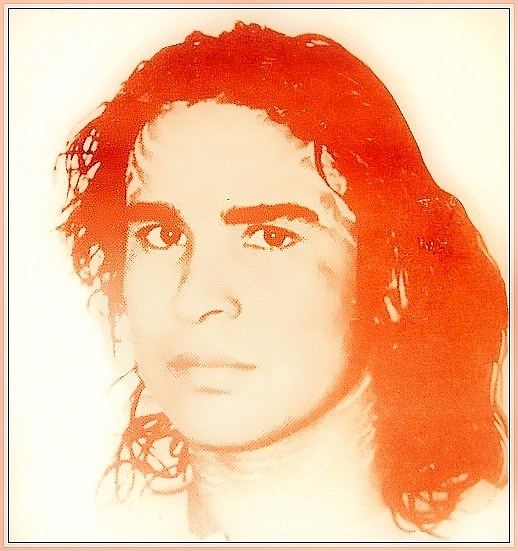
Babaji


Because Babaji was famous as the young Babaji of Nainital many of his disciples presumed that he would live forever without aging or dying. While this can be true for the spirit of saints it can never be so for the physical body that they occupy from time to time. It has been so with all saints including the most revered ones like Jesus and Buddha. Their bodies aged with time and the body died. But their spirit lives on as indeed it does for ordinary mortals too, only they do not know it.

In my other blog on life and spirituality, it is described that those who believe in reincarnation are not afraid of death and when their present duties for example taking care of children, family and aged parents is over they are not afraid of death and look forward to new lives in younger bodies that are more agile and energetic. This is especially true of saintly personalities who have the ability to recall previous lives. They stay no longer than their mission in their present bodies requires and as regards the young Babaji of Nainital this was especially true. It has been so with many other saints like Swami Vivekananda and Jesus too. Some like Gandhi and Buddha undertook much lengthier mission and stayed on until their bodies aged.

It is said that saintly Babas have the power to take on the bad karma of their disciples and they do that from time to time out of compassion and to assist their disciples. However in doing so their spiritual state and subsequently their physical state get compromised because they may do this faster than the bad karma can be dissolved in the universe. This reflected on Babaji and a sign was his putting on weight.

Amongst the unusual powers of Babaji was one in which he could make himself appear at more than one location simultaneously. What is not known to disciples that witnessed this power is that Babaji only created an illusion of that in the mind of disciples while his actual physical body remained at one place. Nevertheless it served the purpose because the illusory body could communicate with the disciple. Another power of Babaji was that  through meditation he could also make his body immune to heat or cold and at times meditated in the nude in cold winter on the banks of the Gautama Ganga River that flows by the Haidakhan ashram. Readers who are intrigued by this concept of eastern yogis wearing nothing more than the sky as their garment even in winter may wish to read the novel – Nude besides the Lake, available from Amazon that explores the concept in a light hearted and enjoyable manner. The word in the title is ‘besides’ and not beside in case you search for it on Amazon. You would find reviews of that work at Amazon. Add your own review if you wish. The book also explains much else of the philosophy of Baba Haidakhan as known only to a few who are spiritually related to him. The kindle version of it is inexpensive and can be downloaded in minutes.

Thus one night of February 1984, at an age of a little over 33, Babaji decided that it was time to move on and that night he let down his guard as he meditated on a cold February night in the nude. His physical body acquired pneumonia and he did nothing with his powers to banish that sickness. Soon after he left the world.


Adhering to the principles of Love, Truth and Simplicity; shunning idleness and the love of God were the main tenets of Babaji's philosophy. Babaji did not insist on any one particular view of God, Disciples were free to choose their own, He himself, as a Hindu though viewed God in his formless aspect (as during Havan) and also in humanised view both as a male (Shiv-Shankar) or female (Mother Goddess; see a post on that herehttp://nainitalgoddess.blogspot.in/2012/11/sunanda-goddess.html)  


PS: To read about my first personal encounter with Babaji in adult life - read the post - Encounter with a Himalayan Mystic in this blog - You will find a link in the side column.


While the author has described what others think who Baba Haidakhan was, he has so far refrained form declaring what he personally thinks about it. The reason is that even he is not fully certain as to Babaji’s real identity. Perhaps no human, even an evolved yogi cannot be, perhaps it does not matter, perhaps it is enough to recognize him just as one of those special saintly personalities charged with goodness that come to live on earth from time to time, or perhaps one can reveal what one’s own reasoned guess and experience in the matter is, for one can never be sure in such matters and certainly there can be no hard scientific evidence to back it  for such spiritual matters are beyond the realm of the physical sciences. My own estimate, based on my personal encounter and experience of Baba Haidakhan is that he is one of the many reincarnations of an ancient holy spirit who has taken birth repeatedly and lived mainly in the Himalayas around the present districts of Nainital and Almora of Uttarakhand. I cannot say for sure if one of his reincarnations was the same Babaji as described in the book ‘An autobiography of a yogi’ for I do not know much about this last but I do think that he is a reincarnation of some ancient sage, who appears from time to time as an instrument of the Divine in human form, who has now also become a part of Himalayan mythology, probably with some facts and some imaginary tales woven around him as happens with history lost in the midst of time and popular imagination.
For more on babaji check  this other post too:

Update June 19, 2013: Babaji like others before him including Jesus did say that evil is so widespread in the world that the Lord would destroy it soon saving only a few pure souls. The world is still around. How are we to interpret these messages then? One explanation is that the infinite lord is infinitely compassionate too and postpones time and again this scheduled task out of his infinite compassion, but for how long?