Showing posts with label Babaji. Show all posts

Tuesday, 28 November 2017

Love, Truth and Simplicity


Love, Truth and Simplicity

 
From breath to Breath
From life to death

Life is a room with six doors
A life where the choice is yours

Doors to doom and danger
Lust, greed and anger

Bright are the other three
Love, truth and simplicity

From the author of - The Babaji Affair

Monday, September 23, 2013

Possibility of relocating congestion of Nainital to Khurpa Tal

A view of Nainital and Naini Lake ( Photo by Jasdeep Sethi)

  
While everyone agrees that Nainital has become over congested and there is a need not just to stop new development but also relocate some of the existing one that is choking the hill sides, no concrete proposals are even being studied for it.

Some promising areas for relocation are on the road to Bhowali or around Hanuman Garhi. However another very promising area is the location around Khurpa Tal. Geographically it is a very close to Nainital.  However, the existing road to it through the hills increases the distance considerably. What would be required is to connect both localities by the construction of a new road to it  involving a tunnel of about a quarter of kilometer length through the hill. The other side of the hill towards Khurpa Tal would then be a walking distance from the flats, the central location of Nainital. Presently much of the area around Khurpa Tal is used as farmlands. It has the potential to become a suburb of Nainital where some existing plot owners or establishments in Nainital could be induced to move with the incentive of larger plots and more open surroundings. Sale of some new plots at the new location would raise enough money for construction of this new link.

Thursday, September 12, 2013

The Deathless Babaji

There are some who believe that there is a mystic Babaji who is deathless and roams about in the Kumaon Himalayas hopping from hill to hill. Some even thought that Baba Haidakhan about whom there are several posts in this blog (see links to the left) is that deathless Baba. As regards that it is only the soul that is deathless, all physical bodies are transient, they are born and they die. Even the planets and the universe are transient. May I quote from another blogpost on this,


"It is really very surprising how humans in this age of science and logic can believe, without the slightest shred of evidence, that there is a young Babaji who roams and hops about in the Kumaon hills and never dies! or for that matter a Lochness Monster or a Himalayan Yeti"http://ashokmalhotra.wordpress.com/2013/09/09/truth-about-yoga/

Sunday, September 8, 2013

Babaji or Baba Haidakhan - The Nainital Mystic who restored truths about Yoga


What Babaji of Nainital said.
The Himalayas have been a source of spiritual knowledge since ancient times. It has been the abode and/or origin of numerous saints, mystics, including the Great Buddha; and according to Hindu and Buddhist Mythology also of gods, goddesses and Bodhisattvas. Certainly if a location has to be chosen for that in the world it has to be The Himalayas as the Highest mountain chain of the world and also the most conducive to life and beauty.

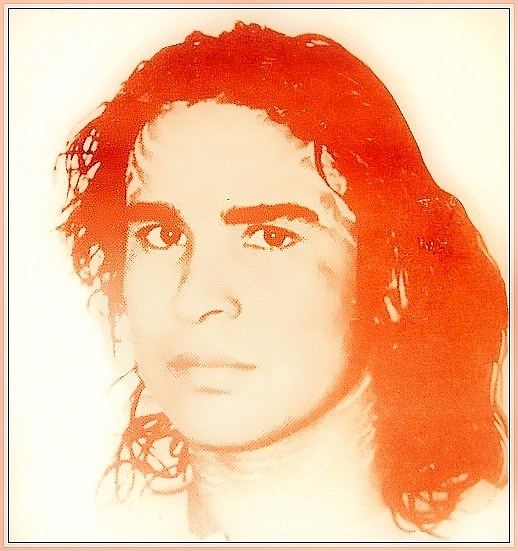
In 1970, a youthful saint of around twenty, called Baba Haidakhan or Babaji lovingly by his disciples appeared in the Nainital District of Himalayas. He died in 1984, even as he had said while he lived that the body is meaningless and transient but the soul lives on.

While he lived, he lovingly and joyously demolished certain fallacies and myths about yoga that were spreading in the world. It was a time when there was a great interest in yoga in the west. Certain popular sects were propagating myths about yoga, perhaps for commercial reasons, that were dispelled by those who came close to Babaji. who was not into accumulating wealth or membership. He accepted some disciples who sought his blessings while asking others to go elsewhere since they were either not ready or needed him no more.

Some of the popular myths that Babaji dispelled were, that a certain techniques of yoga that were called Kriya yoga by some sects were not due to Babaji and also the ancient Hindu Scripture – The Bhagvat Gita (also spelt Bhagvad Gita) and none should be a secret unless it is for making money as a business.

In this respect it may be noted:

  1. Although the Bhagvat Gita describes several yogas as well as practices of yogis, no where in Bhagvat Gita is there a mention of Kriya Yoga.

  1. The first recorded mention of Kriya Yoga is in the highly regarded ancient text by Patanjali on Yoga. Chapter 2 of his text begins with description of Kriya Yoga.

  1. The Kriya Yoga as described by Patanjali is not the Kriya Yoga as described or practiced  by a modern popular sect. No part of Kriya Yoga  has anything to do with breathing techniques. Those are other yoga techniques (Pranyama), beneficial too, but not kriya yoga. According to Patanjali the Breathing techniques are a part of Ashtang Yoga.

  1. That Baba Haidakhan denies being the source of what is being taught as the modern Kriya yoga and that what is taught by Babaji is not a secret.

  1. That the Kriya Yoga as taught by Baba Haidakhan is precisely the same as that described by Patanjali in his ancient and original text on Yoga.


  1. Through his public death, Baba Haidakhan also demolished the myth that a physical body can live permanently. None has since the beginning of time. All are transient, but the soul survives and a soul dwelling in God and born may be called an Avatar and one born repeatedly as such may be called a Great Avatar or Maha Avatar.

The essential elements of the Kriya Yoga as defined by Patanjali and also taught by Baba Haidakhan first require the prerequisites of Love, Truth ( including not stealing) and Simplicity (including avoiding lust i.e. sex devoid of love and greed or much fondness of worldly attainments)  termed Yama by Patanjali. This was to be followed by selfless work and service, knowledge of self through prayer and/or recitation of holy names, loving and trusting God. That is Kriya Yoga by Babaji and also by Patanjali.

It is as simple as that and no secret as far as Babaji was concerned. There is more on Babaji and his practices in this blog ( just search through) and also in a recent book by this author -  The Babaji Affair. www.amazon.com/Babaji-Affair-Dr-Ashok-Malhotra/dp/149232955X/


Thursday, September 5, 2013

New Book Release - The Babaji Affair


 The Babaji Affair


Hi, my new book - The Babaji Affair - has just been released by Amazon.com. Persons who find eastern mysticism and spirituality interesting are sure to love this book. The cover image is of me sitting in a boat in the middle of Naini Lake of Nainital.

A Novel with Nainital as the Backdrop

A Novel with Nainital as the Backdrop

Just this morning I found a nice review of my novel ‘Nude besides the Lake’ at amazon .com. I would like to share it with visitors to this blog.
Me (in Jacket) and others beside a lake of Nainital District - Sattal


A Satisfying Read July 22, 2012

Nude besides the Lake is a delightful tale of discovery (and rediscovery), friendship, and cooperation and the great things that can be achieved by acts of generosity and respect. There are no bad guys here. It is not a world of conflict and despair. The world that author Ashok Malhotra paints of life in the beautiful mountains & lakes country in northern India is both mesmerizing and alluring. His story introduces details of Indian life, philosophy, spirituality, and culture from the homespun perspective of those who call Nainital home. There is even sensitive tribute to Indian history and British influences. And through it all one can almost smell the dust kicked up by the monsoons and the fragrant roses, magnolias, and almond trees of which he writes. I dare anyone to read this tale and not thereafter want to visit and even spend awhile in that lovely and amazing part of the world.

While reading the story, two other novels came to mind as they share a similar quality of the good things that kindness and sharing can accomplish. The first is Zorba the Greek with its storyline of a young man who returns to Greece and begins to build a local life for himself with the valued assistance of the village drunk who is full of life. While doing so, the hero connects with, and even positively influences, the lives of many of the locals. The other story is Under the Tuscan Sun where a young American woman moves to Tuscany Italy, buys a villa, and during the remodeling and renovating of it encounters the locals and imparts much of her positive spirit on them, and they on her. While Nude besides the Lake is most assuredly not modeled on either of these two stories, one cannot help but be drawn into the story in a similar way as the hero goes about settling in the strange and exotic land of his Indian grandfather.

Nude besides the Lake is a satisfying read with a good ending (if somewhat of a tease of even more to come). Ashok Malhotra has a distinctive voice that tells an engaging and delightful tale that will please readers who are tired of stories that assault the senses with conflict and calamity. It is a pleasant adventure. If you are like me, you will be sad when you reach the end and will replay much of the story over again in your head. Or maybe you'll just wait awhile and then read it again. That's my plan.

About Mantras and their Nainital origin

r Nainital origin


Photo shows roof of Naini Mata temple in Nainital


A face book friend and cousin - Pardeep - posted something this morning about a Mantra on his wall:

Mantra Dhaarnaa Yon Kar, Vidhi Se Le Kar Naam
Japiye Nishchaya Achal Se, Shakti-Dhaam Sri Ram

These verses in Hindi may be translated as:

From right Teacher learn right technique of repetition of right name
Then mediate with greatest faith, Upon the Lord’s most vital name

I fully agree with my dear cousin that the chanting of Mantras done correctly is a powerful technique, even magical. That is the reason one has magicians chanting spells in fairy tales to perform magic. Recently a college classmate and dear friend got into serious legal difficulties. His name is Rajat Gupta. Until recently he was one of the most senior corporate executives on our planet well known to Prime Ministers and Presidents including Obama and Clinton. He can be found in Wikepedia. However, amongst some of his friends were also some that indulged in illegal insider trading. Those friends are in prison now but because of his association with them some suspicion has fallen on Rajat Gupta as well and those proceedings will begin in court tomorrow. We (his close friends) believe that he is innocent and that would be proved in a court of law in due course. Over the previous year, as he prepared for this trial, I have sent him emails with encouraging words. My friends know of my interests in spiritual philosophy and in times of difficulty sometimes expect some spiritual advice. Mind you though it is only in times of difficulty because who cares for stuff like God and Spirituality when the going is good? To my older friends I have just two suggestions nowadays:

4. Trust and believe in God
5. Learn and practice a mantra containing His name

This is for older friends though. For younger ones I add three more steps:

  1. Enhance the virtues of Love, Truth and Simplicity
  2. Work hard but do not overwork
  3. Enhance cleanliness and order in your self and around you.

These first three steps are not suggested to older persons because they presumably already know more about it than I do or are too far gone to make any worthwhile changes in this direction now. These five steps are just my own classification for spiritual progress and it is a classification I have adapted from a spiritual teacher of Nainital (Baba Hairakhan). Others divide spiritual methodologies into different number of steps. The eight steps of yoga propounded by an ancient teacher of yoga – Patanjali – are the most well known. Yoga is essentially any practice that enhances spirituality and because each step enhances spirituality, individual steps are yogas too and can be given special names. I have termed step number 3 as entropy yoga borrowing from my engineering background and there is an entire older blog post on that in this blog as well as other articles on the Internet on that. Step number 1 encompasses much of what is termed as ethical, moral and good behavior and therefore at the present time we shall skip its elaboration so as to return to the topic at hand – mantras. For example, simplicity includes absence of affectations and pretensions, lack of greed, lack of pride, contentment, humility etc. etc.

We have an email group of friends that corresponds regularly sending group emails and a very dear friend Gill often responds that all this spiritual stuff is all bunkum. My suspicion though is that secretly he practices much spirituality because in his behavior he is very spiritual. I suspect that he practices Mantra meditation too and that his secret mantra is the most popular mantra of the Sikhs – Wahe Guru – meaning the Lord is great. I shall send him a link to this blog and let him contradict what I have written about him as a comment here if he wishes to.

On the other hand in his most recent email Rajat Gupta- the other dear friend facing the Judge - has responded that he regularly practices another mantra that is highly regarded by the Hindus since ancient times – The Gaytri Mantra. This mantra is a bit long containing around fourteen words or so in Sanskrit that praise God and seek his guidance for right behavior. I said around fourteen words because in Sanskrit it is possible to join or disjoin words changing their number in a phrase. I too practice the Gayatri mantra from time to time but for regular chanting I prefer shorter ones.  A mantra can be as short as a single word or it may contain many.

In order to practice the chanting of mantras one needs to learn a mantra and learn the associated techniques for their recitation. The technique involves an examination of one’s breathing during recitation ensuring that it is smooth and even. It also involves choosing a point or thought for focus because without it the thoughts would wander and the mantra will become ineffective. Mantras can be chanted aloud or silently. I believe they are more powerful when chanted silently in a quiet place. At the outset I mentioned that a Mantra should contain a reference to God but mantras without a reference to God also produce beneficial effects. However the latter are less effective, in my view. Including the name of God is only possible when one believes in God. I can almost hear my friend Gill or my blogging friend Vincent screaming - I do not believe in God. The Buddhists don’t either. Instead some of their mantras include the name of Buddha such as

Buddham Sharnam Gacchami

That means I go seek the protection and shelter of Buddha. The favorite point of focus during recitation for Buddhists appears to be their own breathing and it is my favorite too.

Mantra meditation is followed in all major religions of the world as well as spiritual practices that are not religious. Ancient Christian monks chanted their mantras with the help of rosary beads and the Muslim Sufis frequently chant the single Name – Allah.
In my experience, Allah is the easiest and most beautiful word to chant because it beautifully synchronizes with breathing when the Word is spread over the inward and outward breaths as Al- Lah. However not being a Muslim most often I chant other mantras.

Before practicing mantra meditation one must learn some mantras that appeal. A yoga teacher – Mahrishi Mahesh Yogi – apparently made a good pile of dough selling mantras to individuals. However one need not purchase a mantra. One can discover or invent one’s own with some effort. Baba Hairakhan of Naintal suggested the single Mantra to all who sought his advice,

Om Namha Shivai

This mantra includes the name of the Lord in his formless aspect as Om and in a formed image as Shiva. Perhaps if Baba Hairakhan had lived longer I would have asked him for some more mantras. However in keeping with the tradition of the Young Babaji of Nainital he left the world young at the age of 34. I have great regards for Baba Hairakhan because he was not in the business of collecting money. He never asked any from his disciples and even today one can go live and eat free in one of his beautiful ashrams in Nainital and one would not be asked for any donations. His free hospitals and ashrams are run from donations disciples offer voluntarily in his temples or trust.The favorite mantra of the favorite eastern teacher of Steve Jobs– Neem Karoli Baba (also from Nainital district) was probably,

Jai Shri Hanuman

And that of Gandhi,

He Ram

Do you have a favorite mantra too? If so please tell us about it as a comment.

The Kriya Yoga as taught by Babaji or Baba Haidakhan


A view of the plains  from the road to Haidakhan
NOTE: Some Modern Yoga practitioners have given the name Kriya Yoga to a different set of practices than its original meaning. Although these latter practices are perhaps beneficial, the author does not know much about them but is thoroughly aware about the original practices.  It may be noted that there is no mention of Kriya Yoga in the Bhagavad Gita and that its first recorded mention is in the Yoga Sutras of Patanjali. The Kriya yoga as advocated by Babaji conforms to its original unmodified definition as expounded by Patanjali. Modern students of yoga must become clear about the differences in order to avoid confusion or misdirection.  For more on this see a separate blog post at:  

http://ashokmalhotra.wordpress.com/2013/09/09/truth-about-yoga/


In an older post “Who was Baba Haidakhan” you may learn more about this holy personality of the Nainital Himalayan region of India. You will find that post as well as the comment and response to it enlightening. To reach it click older posts at the bottom of this blog and scroll down to it or you might find a link in the left side bar. This author is not a disciple of Baba Haidakhan in the traditional sense but has known him closely through an old family relationship of the Nainital region; therefore, there is more information in that post and comments than is generally known.

Baba Haidakhan spoke very little while he lived and certainly very little on spiritual matters. He believed there is no end to such discussions and there is more value in practice. Reverend Robert  the principal of Sherwood College, the leading school of Nainital, who knew and associated with Babaji before his public ministry began, said,
"The Language of God is silence, Everything else is at best an approximation." 
However any reader who is more interested in spiritual theory should check out my other blog at http://someitemshave.blogspot.com. It has some nice pictures too. Kriya yoga was defined very briefly by the ancient sage and leading exponent and founder of yoga – Patanjali in his treatise on yoga as consisting of three parts – tap, swadhyay and ishwar sharanagati. These are three Sanskrit terms that mean,  work and discipline, knowing thyself and loving God by depending and submitting to Him. The treatise of Patanjali on yoga is one of the few ancient Sanskrit texts that has survived latter day interpolations and editing because of its brevity. However it is an advanced text not easily understood by most. It contains absolutely no reference or recommendation to rituals, gurus, caste, worship of numerous gods etc. as found in other Hindu literature.It is a work of pure spiritual science.

Babaji gave practical shape to these three aspects in the following manner. He discouraged idleness and one of the first lessons to disciples was to engage in work instead and follow the discipline of the ashram. Those at the ashram were involved in building works.As a means of self-knowing, babaji insisted on the cultivation of three virtues – Love, truth and simplicity. Any deviation from these virtues is the cause of ignorance in beings. That combined with meditative recitation of mantra were the means to self-knowing. His usual mantra advocated for all was “ Om Namah Shivai” But a disciple could choose another if he so preferred.
In the experience of this author as well as per recommendations of spiritual masters whatever the chosen word it is unsafe if it does not refer to God or a divine spirit, lest it leads to unholy possessions :) Moreover it must not interfere with even, slow and smooth breathing in its choice and pronunciation. Scientific studies that have shown that the choice of nonsense words are as effective are perhaps right - until the subject jumps over a cliff :)
Babaji advocated the love of God as a means of getting close to the Lord by remembering and chanting his name while depending and submitting to Him. He demonstrated Hindu rituals because he was born to a Hindu father for that but advised that a disciple could choose any ritual he was comfortable with (he organized rituals from other religions too at times in the Ashram for demonstration) or no ritual towards that end if he wished but focus on the almighty through Jap or chanting through chosen holy words and/or observation of breathing is a great aid.


To summarize the essential Kriya Yoga of Babaji put very briefly is this: 

Embrace Love, truth and Simplicity to the extent possible; do your work and the right thing the best you can; love God and place your trust in Him. 

The message of Babaji was very simple because he is also known as Bhole Baba i.e the Simple Baba. if you are looking for something complex and impressive perhaps even to fool others or get fooled with yourself, or as an escape or magic from what really needs to be done for evolution and happiness, then you are knocking on the wrong door. It is as also another evolved saint Kabir has said in old Hindi:

Pothi Pothi pathat ke, Pandit Hoe na Koe
Dhai Akshar prem ke Pathe jo Pandit hoi

Which translates as:

By reading volumes upon volumes no one becomes a  philosopher 
Two and a half words of love  if  understood properly are more than enough

Babaji of Nainital
Aside from this teaching of Kriya Yoga through demonstration, Babaji taught very little and spoke very little. He was very human from time to time while he lived when not possessed by the Holy Spirit and what has been recorded, as his sayings are mostly his small talk as a human since his personal practice involved total silence when possessed by the Holy Spirit. If viewed from a Hindu perspective, this author regards Babaji in spiritual terms as a son of Lord Shiva, a Hindu visualization of the Heavenly Father and the Goddess of Nainital - Naini Mata whom he called Haidakhandeshwari ( goddess presiding over Haidakhan) because she led him to Haidakhan in Nainital District for his ministry amongst humans and mothered him there.While Babaji lived and even now after he has gone his disciples ascribed many characters to him, such as avatar, mahaavatar, reincarnations of other holy personalities etc. In the opinion of this author none understood his true nature. More on him has been written in an older post as already mentioned.

Just as soon as babaji's body as Baba Haidakhan began to age he decided to hop over to a new younger one in a new birth, to a younger body, an art known to many mystics. He left his present body in 1984 in the arms of a disciple and friend who used to cook for him often and who owns one of the grandest heritage mansions from British times on the road up the hill, just ahead of  the Church, in nearby Bhowali in Nainital District where he lives with his family. A special room in his home with lovely pictures of Babaji is devoted to Babaji that I along with Babaji (??!!) visited in the summer of 2007 and sang songs in praise of our host while he fed us with with choice cashew nuts, almonds and raisins and he along with his wife and daughter requested us repeatedly to stay for dinner. It was a joyous occasion where everyone laughed and smiled.  On the same visit Babaji also took me to the Haidakhan Ashram and kept me in Shatriji's old room for a few days. The spirit of Babaji lives on and is forever at the service of those who loved him, especially in times of dire need as one of the mystic instruments of the Almighty ever engaged in bringing solace to all life, perhaps just as the Bodhisattavas do for Buddhists or more.
Jai Baba ki!


Author's Personal Biographical Notes:
Nand Rani Malhotra, 1988, Jaipur
Reverend Robert Llewyln (http://www.light-for-the-journey.org/?page_id=91) mentioned in this note was a Christian Mystic given to visions who came from a family of Christian Mystics. He was  well known to our family. I have hardly any memories of him but have known about him from my mother . At that time our father was posted away in nearby Nepal working for an Indo-Nepalese trans Nepal highway project and would visit only in vacations. We lived in the care of some army soldiers and a wonderful cook named Hira Lal who made the loveliest of mutton chops on earth that he had learned to make from the wife of a British Brigadier for whom he had worked earlier and who left for England soon after India was freed of British rule. We lived for 
Deepak Malhotra, 2013, Spain
several years in a home on the hillside that had a full view of the lovely Naini lake and surrounding hills. I have honored Hira Lal by naming and modeling the cook in my recent novel on him.  At the time Sherwood college situated in Nainital, one of the best known schools of India, admitted students as boarders only but when my mother (Nando, Nand Rani Malhotra) mentioned that she could not afford boarding fees for my elder brother (Deepak Malhotra), Reverend Robert as the Principal of Sherwood College made an exception to the rule and permitted my elder brother who has since lived in UK and  now in Spain  to join as a day scholar. A horse was hired to carry my brother and sister (Mrs. Kiran Chopra) to their schools everyday on the opposite hill.  

Dr. Ashok Malhotra, 1986, Canada
One day when my uncle on a visit (who later became a Brig. in the army) was near the band stand on the flats he discovered that a baby show to select the healthiest and cutest baby of Nainital was on. He rushed home to grab me, even in dirty clothes (there was no time to change) and entered me in the competition, and this author, yours truly, was selected to get the first prize (a story often repeated by my uncle). Perhaps Rev. Llewyln had a hand ( hope not though)in that too. A photo of mine from 1986 is posted on the right. A recent one in a boat on Nainital lake is in a blog post as well as in my profile in the left side bar.  All these are photos at home. Professional ones along with professional bios of me and my younger brother Anoop may be found by searching on wikipedia ( use search term Dr. Ashok Malhotra in google since there are several other ashok malhotra's). Deepak has been a wee bit busy with the ladies and an exploration of wine to get on to wikipedia yet.
Lt. General Anoop Malhotra, 2013


When my younger brother, Anoop Malhotra (now a general) was born in Nainital the Reverend Robert Llewyln gave special blessings. When he heard that the new baby was born as a blue baby with a cord around his neck, he mentioned that Julius Caeser too was born that way and the baby would one day be a General Anoop Malhotra (http://en.wikipedia.org/wiki/Anoop_Malhotra). The power to prophecy is as common a symptom of mystic infection as a high body temperature is of a viral one, so that the most evolved of the lot have been termed as prophets in some parts of the world. It was this author who convinced  father, who usually tended to be obstinate like a bull but gave in this time, that Anoop be permitted to follow his destiny by joining the army rather than a medical doctor that the father wished for instead. Anoop, although not spiritually inclined, had a great fear of spirits and ghosts and this author in his younger days used to have great fun by covering himself in a white sheet and yelling BOO like Casper the little ghost and seeing his younger brother squeal and scream with fright as he yelled out for Mama :)

Reverend Robert's great grandmother was a friend of Queen Victoria. Both secretly shared mystical interests, some of it due to the Mystic Dame Julian of Norwich, the first female  to become an author in the English language. She regarded God not just as a male Father but also a female Mother. Dame Julian also did not uphold the existing Christian interpretation of eternal hell for non-believers, regarding suffering as something that was self limiting in time (as through reincarnation) eventually ending in the good of all souls - All shall be well. There are posts on the Nainital connection of Queen Victoria in this blog. Babaji's spirituality does not call for a change of religion by anyone but demonstrated how spirituality can be restored to it while ignoring the unnecessary latter day additions in that religion. Robert returned to England for good to be by the side of his beloved Dame Norwich in his last days in his present reincarnation, some time after Babaji left for Haidakhan. Books by Robert on mysticism composed in Christian metaphors are available at amazon and other online locations.

The blessings of the gods and goddesses of Nainital continue to this day for this author. During 2009- 2010, this author spent as a director of an educational institute in the wooded foothills of Nainital. Any weekend  the opportunity arose, he would visit Nainital driven comfortably by his driver Shankar provided by the Institute. the first visit would be to the temple of Naini Mata. After that due to Her blessings and through the medium of the senior most official of the region a serviced accomodation would be arranged for this author at a guest room of the most prestigious location not just in Nainital but in all of Kumaon (or at one time in all of the Northern province of India) i.e at Raj Bhavan. The pictures on the cover of this blog show the temple to the left and me standing in front of the Raj Bhavan to the right with the Naini lake in the middle.

The only book on Naini Mata in English has been authored by this blogger. it is available at most major online retailers worldwide, that will show up in a google search with the title 'Naini mata'. The relationship of Baba Haidakhan to Naini Mata has been described in posts on him in this blog. She was his spiritual mother.

Who was Babaji or Baba Haidakhan?


A distinguishing feature of Hinduism is the existence of Numerous Gods and Goddesses. This is so even though Hindus believe firmly that there is only one God in the universe Who pervades everything and that there is nothing else besides him. To a person not familiar with Hinduism this monotheism appears contradictory to the polytheistic practices of Hindus. However, to a devout Hindu there is no contradiction. In Hindu philosophy it is believed that the infinite eternal Supreme may act through any finite being in the universe in order to carry out the functions of the universe or to communicate with a devotee. A devotee may regard the Infinite in a particular finite form possessing defined attributes and a chosen name in order to establish a tangible relationship with the Infinite and formless God of the Universe. The Bhagavat Gita (Or Gita in short), one of the most highly regarded scriptures of Hinduism explains this in verses 3-5 of chapter 12 as follows“ Those who controlling all their senses and even minded towards all, devoted to doing good to all creatures constantly adore the Supreme, even as present in their very selves, the unthinkable, all pervading, eternal unmanifest and immutable Supreme spirit they come to me. However the path of those who have their mind attached to the formless unmanifest is rugged for identification with the formless is attained with difficulty by a consciousness centered in a body possessing form and attributes. “When a Hindu chooses his or her favorite form of the Divine Infinite, it may be one that is characterized by particular benefits that the chosen God can grant to a disciple. Thus the Goddess Laxmi is regarded as a Goddess that can shower wealth on a devotee if pleased. 

The Bhagvat Gita does not regard highly a devotee that approaches the Divine Spirit with the aim of securing particular worldly benefits. This is explained in verses 21 to 23 of the Gita as follows:“Whatever Celestial form a devotee seeks to worship with faith the Eternal being stabilizes the faith of that devotee in that very form. If he worships and desires an enjoyment from this deity, he obtains that enjoyment if it pleases the Eternal Being. However the enjoyment gained by such persons of limited intelligence is perishable. The worshippers of Gods attain the Gods, whereas the worshippers of the eternal supreme spirit attain the eternal supreme spirit.”Thus it appears that although Hinduism as expounded in the Gita supports the practice of approaching the Eternal Supreme being through various Deities possessing various forms, it does not regard this practice as the best if it is associated with achieving some worldly gain. Elsewhere the Gita has explained that the best devotee is one who approaches the Divine out of wisdom and love only and not for the attainment of any gain or alleviating any suffering. The Divine can see that on His own and grant a devotee unasked anything that is necessary for his or her welfare.There is full freedom in Hindu practice to choose any particular God or Goddess for worship. It could be a single God or it could also be many since all represent different aspects of the same Infinite Supreme Being. The eternal Supreme Being is neither male nor female but the Gods who are a part of the physical universe are either male or female and a Hindu may choose either a male or female representation of God as per his or her inclination. The various forms and attributes of the innumerable Gods and Goddesses have been handed down through the ages. The origin of some is not known whereas some have been due to the visions of saintly seers. In this respect new forms of Gods and Goddesses can and do constantly emerge. When a God and Goddess is a historical personality there is likely to be a great deal of history and mythology associated with that God or Goddess. Some Deities such as Shankar, Krishna, Rama and Hanuman and the Goddess Durga are widely worshipped whereas there also exist deities that are worshipped in a single village consisting of a few hundred people only. In many cases a single God or Goddess may possess many different forms and names particularly if the God or Goddess is an elevated one close to the Infinite. Thus the God Vishnu possesses many names and avatars and so does the Goddess Durga. Some forms of the Goddess are gentle and others fearful. The Goddess takes on a fearful form when conquering great evil forces of the world. The Sanskrit text Durga Saptashati by the sage Markandya describes many of the forms and names of the Goddess.The scriptures describes the eternal Supreme being who may be related to the Divine name Om or Shiva existed as neither male nor female at the beginning of creation. He then produced the female principle in order to propagate the physical universe through the union of males and females. The female entity was produced from the very being of the male creator much in the same way as eve was produced from a rib of Adam in Semitic mythology. It is interesting to note that modern scientific studies have established that the males of all species carries both the male and female, x and y, chromosome whereas the female carries the female y chromosome only.The original female divinity, the Goddess Durga has the position of a female consort of Lord Shiva. Both Siva and Durga have appeared in various forms and continue to do so in order to create the physical universe. They may also act through other beings including humans who worship these divinities and surrender their free will to them. When such worship and surrender is total, the human acquires supernatural powers and may be regarded as a physical representation of the chosen deity. Thus it is held by some that Shankar was a sage who meditated for several years on mount Kailash of the Himalayas to the extent that he lost his own individual consciousness to Lord Siva. He is therefore known as Shiv Shankar and his is the form in which many Hindu’s worship the infinite formless creator. As Shiv Shanker the primal Goddess Durga too took a human form and became his consort.

In the Nainital District of the Himalayas the form the eternal Goddess is worshipped in is as Naina Devi of Nainital or as Nanda Devi in the higher reaches of the district. She is known by other names and forms as well such as Kasar Devi or as Nando Devi. Nanda Devi is believed to have reincarnated several times in the district over the ages in various communities that came to live in the district and often had the same or similar name even in her human reincarnation. The origin of Goddess worship in Nainital district dates back to around the beginning of this millennium. The first mention of Naina Devi in human history is as the Goddess Nana in ancient Sumeria. A diplomatic treaty signed 1895,  by the Shah of Persia, accorded to France the exclusive right to carry out archeological excavations in Persia. Morgan was appointed Delegate-General of Antiquities in Persia, with a mission to carry on the research at Susiana. Morgan and colleagues commenced work there in 1897 The remains discovered by them consist of immense numbers of inscribed bricks covered with cuneiform writing and of works of art. As to the inscriptions in the Elamite language. Several were brought to the Louvre in Paris. Dr. Scheil has deciphered these: -

About B.C. 2280 the king of Susa, Kudur-Nakhunta, affected the conquest of Mesopotamia and decorated his capital with the spoils of the towns of Chaldae. Among these was the statue of the goddess Nana, which he caused to be transported from Uruk to Susa. During the twelfth century B.C. The kings of Nineveh became the most powerful rulers of this part of the world. They were the dominating power in Chaldæ and constituted themselves protectors of the country against the incursions of the Susians. Under Sargon, king of Assyria [B.C. 722-705] and his successors there began a mighty struggle, which ended with the ruin of Susa by Assurbanipal in B.C. 647. The king of Nineveh, relating his conquests in the land of Elam, records that sixteen centuries earlier Kudur-Nakhunta, king of Susa, had invaded Mesopotamia, and carried away the statues of the Chaldæn gods, more especially the image of the great goddess Nana, which thus remained prisoner until he, Assurbanipal, went to her rescue. (Assyrian Discoveries: An Account of Explorations and Discoveries on the Site of Nineveh, during 1873 and 1874 (Paperback) by George Smith, Adamant Media Corporation, 2001, ISBN 1402155719) 

By the beginning of the present millennium the worship of Goddess Nana appears to have spread through a very large part of the old world including Hungary, Armenia, Persia, Central Asia and South Asia. In India the worship of Goddess Nana appears to have been introduced first by the Kassites deported from Persia by the Assyrians and later perpetuated by the Kushanas. A rock inscription seven kilometers from Almora in Nainital District estimated to date to second century B.C. pays homage to the Goddess of the Kassites – Kasar Devi or Nana. The Kushanas recognized Nana as the Goddess with the lion and as the consort of Lord Shiva as depicted on their coinage. The Kushana empire (First to third century) stretched from central Asia to northwestern India covering the Himalayan regions as well as much area to the south and north of the city of Ujjain including present day Uttaranchal. The Kushanas were of central Asian mongoloid origin and it is probably partly because of this reason that the northwestern tribes of Himalayas display partial Mongol features. The reverse of Kushan coins is a space reserved for gods and goddesses, often symbols of dynastic power and authority. On the reverse of coins there is an image of a lion along with the Mesopotamian goddess Nana. The image of the lion is drawn from the reverse of the coins of the Greek kings. It is certain that it represents a lion in this case because in the Kushan period Nana is often represented with a lion. There are no earlier examples of Nana on central Asian coins but after Sapadbizes she appears on coins of several Kushan rulers. Though most coins use the simpler spelling Nana, some of Kanishka’s coins use the legend Nanaia. The spelling Naina has been introduced over the past two centuries when the district of Naninital came under British rule. On the coins of Huvishka and Kanishka II/III the Goddess appears seated on a lion. The early Guptas (Chandragupta) continued the use of this image on their coins. Huvishka stuck coins with Greek, Hindu, Zoroastrian and Bactrian deities. Some of his rare coin issue shows Goddesses Uma and Durga with her vehicle Lion. The representation of Nana with Shiva on some of Huvishka's coins is significant. It shows that the Kushana Hindu priests recognized Nana as the primal Goddess and consort of Shiva. Later Kushana rulers (VasudevaI, KanishkaII, Vashishka) used either Shiva or Lakshmi in their coinage.A kasssite tribe the Katyuris appear to have ruled the Himalyan region of Kumaon since ancient times both during the Kushan and Gupta period as well as later. Villages of Taleshwar, Tillari and Deora about two hundred kilometers from Nainital have archeological remains and inscriptions of Katyuri Kings. The Goddess Naina is believed by some to have reincarnated as a princess of the Chand dynasty of the region. She was worshipped as an avatar of Goddess Durga or Naina. A buffalo killed her on her way to her in-laws soon after her worship began as a goddess to neutralize the Karma of a previous birth when the Goddess had killed a demon who had taken the form of a buffalo. The highest peak of the region is regarded as her abode and named after her.The Naina Devi temple site in Nainital is recognized by some as the spot where both eyes of the Devi fell during her avatar as Sati. However The Nainital region is not the only region recognized for this. Another spot more famous for that is in Himachal Pradesh north of Anandpur Sahib where a huge temple of Naina Devi exists. In 1880 when Nainital District was under British rule a huge landslide took place destroying the ancient temple. Amarnath Shah reconstructed the temple in 1883. The most famous temple of the Goddess with the name Nanda is in Almora.The Goddess of Nainital has been the patron Goddess of some of the greatest civilizations seen ay mankind for over four thousand years. It is not surprising then that the District of Nainital where She presently reigns supreme. The present Uttarakhand Government must do its best to preserve the glory of this district as such and the author of this article is prepared to assist that effort in any humble way that he can. This article is a small contribution in that direction.

Who was Babaji or Baba Haidakhan?

The Himalayan Hill Ranges are dotted with lakes, rivers,  springs bearing pure sweet water, wild flowers, butterflies, pine, oak and numerous other trees. Here the air is fresh, crisp and full of life giving oxygen. Certainly if a region has to be chosen as the abode of Gods on our planet, it would have to be the hills, valleys and caves of the Himalayas.

The Himalayas are also home to numerous Monasteries and Ashrams (Hindu Monasteries). Local inhabitants call the region Dev Bhumi or the abode of Gods. This region to the north of India has been marked by the appearance of saints and divine personalities since times immemorial. Many saints have been born in this region including the Great Buddha. Others born elsewhere have spent numerous years meditating in the Himalayan ranges. A youthful saint of about twenty years, who later became famous as Baba Haidakhan appeared in 1970 in the Kumaon foothills of the Indian Himalayas in the district of Nainital. Baba or Babaji is a general term used for saintly personalities in India. Often Baba’s do not disclose their place of birth or origin and are simply known by the name of the place they appear in. Thus Baba Haidakhan was called Baba Haidakhan because he first appeared near the village of Haidakhan and later built a well-known Ashram at the site. When a Baba stays in more than one place, the same Baba is called by different names by different people. The city of Jaipur where this author presently lives is said to have been constructed due to the inspiration given a few centuries ago by a saintly Baba to the King of Jaipur State (Jai Singh). The Baba was called Tadkeshwar Baba because he was found meditating under Tad trees (a variety of Palm). The same Baba probably lived at other places at different times (including the Himalayas) and would have been known by other names at such other places.

There is a practical reason for Baba’s not discussing their human origins that this author discovered for himself during an experimental stint as a Baba earlier this year. Becoming a saintly personality requires a human to keep his mind focused on a divine center (image or word) through meditation and away from ones own ego, name and desires. Talking of one’s origin draws the focus away from this meditative state back into the gross human state. Therefore, asking such saintly persons of their origin is not appropriate. It may distract them. It produces a meaningless answer. Baba Haidakhan was no exception. He gave different replies to different people. The fact that he was a saintly being is of no doubt since thousands witnessed his miraculous powers. Even if we are to assess him from a purely human perspective it is a miracle that a youth of twenty, with no money or resources, apparently little or no worldly education can inspire such a worldwide following as Babaji did during his brief lifetime. Babaji supervised the construction of huge ashrams and temples stretching over hundreds of acres in remote inaccessible Himalayan locations. This author lived briefly at the Haidakhan ashram this summer and noted that the quality of construction though simple meets the best of engineering standards. Thus from a purely human perspective as well the achievements of Babaji were miraculous. His other miraculous powers as described by his devotes can be found in various books and publications about him. There is no doubt in this author’s mind as well as those of others who have known Babaji that he was indeed a saintly personality of the highest order.

Controversy however remains as to his origin and the type of divine personality that he was.Some claim that Babaji was the immortal Babaji as described in the book - autobiography of a yogi. Others claim that he was a reincarnation of another Baba who lived in Nainital District and died in 1922. Many claim him to be an avatar of Lord Siva – the Hindu interpretation of the divine force that supervised creation and will also supervise its dissolution.


There are some who regard him as a reincarnation of the ancient sage Shankar or Bhole Baba (the master of simplicity) who in ancient times meditated at mount Kailash and as a devout worshiper of the Formless Almighty was regarded by others as an Avatar of Siva. His is the form chosen by disciples of Siva when they wish to visualize the formless creator in human form and they call this representation Shiva-Shankar. Other worshipers of Siva visualize Shiva as the lord of dance Shiva-Natraja , ever engaged in the dance of strings to create the universe and keep it alive, or as the Shiva-Linga, (for the lord is in all things and the lord may be viewed as anything that inspires) the male force for the creation of life, at the point of evolution when sexual distinction becomes necessary for the propagation of life. The chanting Mantra of sage Shankar was 'Om Namah Shivay' the same mantra that Babaji advocated to disciples. One of the powers sage Shankar had was his command over ghosts i.e disembodied spirits (Jesus too had this power according to the Holy Bible). Because of it he was also called the Lord of the Ghosts - Bhuth Nath. Some say that Babaji too had this mystical power.  (Note: This para in blue was added as update on March 28, 2013)
  
Some regard him as merely human because he died in their presence on the 14th of February 1984 and on occasions displayed human childlike tendencies. Babaji himself gave different answers to different people at different times saying yes to all of the above answers on one occasion or another. All of the answers can be true if one understands spirituality from the point of view of saints as explained next.

All souls are from God and dwell in God. An individual soul is a part of the universal soul but functions as separate because of individual desires, experiences, ego and for fulfillment of karma (retribution) born out of individual free will granted by the Lord. An individual soul takes birth numerous times in numerous life forms including animal or human ones until karma and desires are exhausted. The soul then looses its individual identity and merges in the Infinite from whence it arose. Beings such as humans, that are capable of reason and logical thinking, can hasten this process through practices such as meditation, chanting etc.  A human can affect the state partially for brief or long periods of time.  When submergence and destruction of the individual karma, desires and ego is complete, the soul is said to achieve union with the infinite and is not reborn again. Buddha is said to have achieved this final liberation. If a human is able to suppress his or her individual desires, ego and thoughts through meditation temporarily while still alive, one may ask who is it that is acting in that body. Who is using the same human hands, eyes, legs, mouth etc if personal ego has been banished? Here the concept of surrender comes in. Through one’s individual free will one may submit ones body to divine forces for their use. Thus at different times different divine souls may use (or occupy in a manner of speaking) the same body. In this case a saintly person will give different answers at different times – all true. At times when not in divine meditation, the same person may become distinctly human displaying human weaknesses. It is the opinion of this author that most saintly personalities are in precisely this state. Thus Babaji too was many different personalities while he lived, and all his answers were absolutely truthful even though contradictory in purely human terms. 

Hindu philosophy and mythology is ancient, even confusing and complicated, full of parallel and contradictory accounts. Babaji himself spoke very little but some of his western followers scanning ancient mythology and philosophy have tried to give highly complex and unnecessary accounts of Babaji. Such accounts have appeared in publications on Babaji, while the brief message of Babaji was completely as simple as he himself was. Babaji did however say that of all those who come to him few would understand him. When some disciples try and categorize him as avatars or maha-avatar few actually even understand what the concept of avatar is. Often there is an erroneous assumption that the Almighty who is infinite and formless can become a finite human. Essentially, all consciousness of everyone is a part of universal consciousness. A person who harmonises with universal consciousness briefly and partially may be said to be charged with the holy spirit during that period. Sages, mystics and evolved personalities who understand this and function in harmony with the universal consciousness for a large part of their lives are avatars of a facet of the infinite universal consciousness - a facet through which they approach the divine. Others who continue to harmonize repeatedly over several births are maha-avatars that means great avatar. These latter can easily recall their previous births and reincarnations. In that sense maha-avatars do not die even when their physical bodies dies as it must. In Buddhism these latter souls are at times called Bodhisattvas. When one tries to assume that a transient human body that changes every second will live forever, they are perhaps expressing their love for something material whereas the body is meaningless to a saint, merely a temporary vehicle, like a car one uses to get around and discards for another one when it wears out. Why love the car and not the driver instead?

The virtue of truth was one upheld highly by Babaji along with those of love and simplicity. Perhaps the best answer that Babaji gave about himself is the following: -


“I am no one and nothing, this body has no meaning, being a transient and temporary vehicle for the soul.  It  is here to serve humanity.”

Babaji was also the mirror or vehicle in which other divine personalities including the Goddess Naina Devi/ Naini Mata, Nainital Baba and Lord Shiva as imaged by Hindus reflected from time to time. Babaji worshipped Naini mata with the name Haidakhandeshwari (meaning the goddess of Haidakhan) because it was she who mothered him at Haidakhan.

Note the word transient in Babaji's reply indicating a certain death of the physical body. It is ridiculous to think that there is a physical body in the universe that does not die. It has never happened. The physical part of the universe itself does not escape repeated and cyclic death as per Hindu philosophy, albeit after a very very long time.


Update on Babaji added on January 30, 2013


Babaji


Because Babaji was famous as the young Babaji of Nainital many of his disciples presumed that he would live forever without aging or dying. While this can be true for the spirit of saints it can never be so for the physical body that they occupy from time to time. It has been so with all saints including the most revered ones like Jesus and Buddha. Their bodies aged with time and the body died. But their spirit lives on as indeed it does for ordinary mortals too, only they do not know it.

In my other blog on life and spirituality, it is described that those who believe in reincarnation are not afraid of death and when their present duties for example taking care of children, family and aged parents is over they are not afraid of death and look forward to new lives in younger bodies that are more agile and energetic. This is especially true of saintly personalities who have the ability to recall previous lives. They stay no longer than their mission in their present bodies requires and as regards the young Babaji of Nainital this was especially true. It has been so with many other saints like Swami Vivekananda and Jesus too. Some like Gandhi and Buddha undertook much lengthier mission and stayed on until their bodies aged.

It is said that saintly Babas have the power to take on the bad karma of their disciples and they do that from time to time out of compassion and to assist their disciples. However in doing so their spiritual state and subsequently their physical state get compromised because they may do this faster than the bad karma can be dissolved in the universe. This reflected on Babaji and a sign was his putting on weight.

Amongst the unusual powers of Babaji was one in which he could make himself appear at more than one location simultaneously. What is not known to disciples that witnessed this power is that Babaji only created an illusion of that in the mind of disciples while his actual physical body remained at one place. Nevertheless it served the purpose because the illusory body could communicate with the disciple. Another power of Babaji was that  through meditation he could also make his body immune to heat or cold and at times meditated in the nude in cold winter on the banks of the Gautama Ganga River that flows by the Haidakhan ashram. Readers who are intrigued by this concept of eastern yogis wearing nothing more than the sky as their garment even in winter may wish to read the novel – Nude besides the Lake, available from Amazon that explores the concept in a light hearted and enjoyable manner. The word in the title is ‘besides’ and not beside in case you search for it on Amazon. You would find reviews of that work at Amazon. Add your own review if you wish. The book also explains much else of the philosophy of Baba Haidakhan as known only to a few who are spiritually related to him. The kindle version of it is inexpensive and can be downloaded in minutes.

Thus one night of February 1984, at an age of a little over 33, Babaji decided that it was time to move on and that night he let down his guard as he meditated on a cold February night in the nude. His physical body acquired pneumonia and he did nothing with his powers to banish that sickness. Soon after he left the world.


Adhering to the principles of Love, Truth and Simplicity; shunning idleness and the love of God were the main tenets of Babaji's philosophy. Babaji did not insist on any one particular view of God, Disciples were free to choose their own, He himself, as a Hindu though viewed God in his formless aspect (as during Havan) and also in humanised view both as a male (Shiv-Shankar) or female (Mother Goddess; see a post on that herehttp://nainitalgoddess.blogspot.in/2012/11/sunanda-goddess.html)  


PS: To read about my first personal encounter with Babaji in adult life - read the post - Encounter with a Himalayan Mystic in this blog - You will find a link in the side column.


While the author has described what others think who Baba Haidakhan was, he has so far refrained form declaring what he personally thinks about it. The reason is that even he is not fully certain as to Babaji’s real identity. Perhaps no human, even an evolved yogi cannot be, perhaps it does not matter, perhaps it is enough to recognize him just as one of those special saintly personalities charged with goodness that come to live on earth from time to time, or perhaps one can reveal what one’s own reasoned guess and experience in the matter is, for one can never be sure in such matters and certainly there can be no hard scientific evidence to back it  for such spiritual matters are beyond the realm of the physical sciences. My own estimate, based on my personal encounter and experience of Baba Haidakhan is that he is one of the many reincarnations of an ancient holy spirit who has taken birth repeatedly and lived mainly in the Himalayas around the present districts of Nainital and Almora of Uttarakhand. I cannot say for sure if one of his reincarnations was the same Babaji as described in the book ‘An autobiography of a yogi’ for I do not know much about this last but I do think that he is a reincarnation of some ancient sage, who appears from time to time as an instrument of the Divine in human form, who has now also become a part of Himalayan mythology, probably with some facts and some imaginary tales woven around him as happens with history lost in the midst of time and popular imagination.
For more on babaji check  this other post too:

Update June 19, 2013: Babaji like others before him including Jesus did say that evil is so widespread in the world that the Lord would destroy it soon saving only a few pure souls. The world is still around. How are we to interpret these messages then? One explanation is that the infinite lord is infinitely compassionate too and postpones time and again this scheduled task out of his infinite compassion, but for how long?